

Most AI app builders that promise a native mobile app actually hand you something else. Often that’s a mobile website dressed up to look like an app, what’s called a web view. Sometimes it’s a React Native project, a common way to write one code base meant to work on both iPhone and Android, that still behaves differently from a real native build. Dactyl, a new tool from a team of engineers at Deno, the JavaScript runtime company, is trying a different approach: describe an app, and it writes real, native SwiftUI (Apple’s own framework for building iOS interfaces) code you can preview instantly in your browser.
Bert Belder, a Deno co-founder, confirmed on X that the project comes from a small group at Deno, built around a SwiftUI renderer running in WASM (a format that lets code originally written for one platform run inside a web browser at near-native speed). That’s what powers Dactyl’s in-browser simulator: you can tap through a real, working version of your app the moment it’s built, without installing Xcode, a simulator app, or owning a Mac at all.
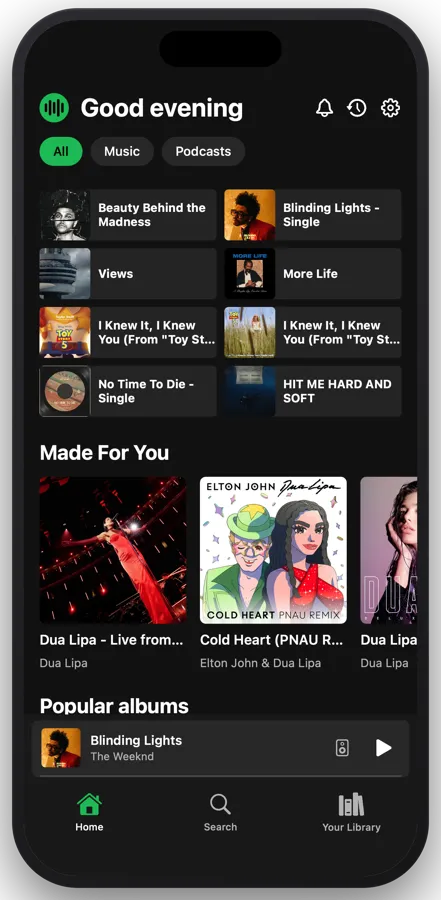
What it actually builds
According to Dactyl’s own site, the agent writes real SwiftUI you can read, edit, and export as an Xcode project (Apple’s official app development toolkit) at any point, with no lock-in to the platform. The same Swift code compiles into a native Android APK as well, the installable file format Android apps normally ship in, which Dactyl says means no rewrite and no web view for the Android version either.
Beyond the interface, Dactyl says it wires up working infrastructure by default: real Sign in with Apple and Google, camera and GPS access, and StoreKit (Apple’s in-app purchase system) for real payments, all functioning in the browser preview before you ever install the app on a device.
Getting an app onto your own phone just takes scanning a QR code, no Apple Developer account required. Publishing to the App Store or TestFlight does require that $99-a-year Apple Developer account, which Dactyl says it walks you through from inside the editor. Play Store publishing isn’t available yet; Dactyl’s FAQ lists it as coming later.
The pricing model is the more interesting part
Dactyl’s Builder plan costs $20 a month, and it’s designed to run on a ChatGPT subscription you already pay for rather than reselling you tokens at a markup. Connect your own ChatGPT plan and the AI work runs on your existing allowance; Dactyl says failed builds don’t cost you anything. A free tier exists too, running on Dactyl’s own included credits instead.
That bring-your-own-subscription model is worth noting on its own, separate from any specific price comparison. It ties what you can build to the usage limits of whatever ChatGPT plan you already have, rather than a separate credit system layered on top. If OpenAI changes what a Plus or Pro plan includes, as it’s doing again this week with Codex’s usage caps, that also changes how far your Dactyl budget goes, even though the two products aren’t related.
What to check before you rely on it
Dactyl is a new product from a small team, not an app-builder platform with years of production traffic behind it. That matters because of what it’s plugging in by default: real user authentication, real payment processing, and real device data like location and camera access.
Before you point Dactyl at actual users or real payments, read its privacy and data-handling terms directly. Confirm where user data from Sign in with Apple or Google actually gets stored, and whether that meets whatever privacy commitments you’re making to your own users. A tool that wires up real auth and payments this easily is also a tool where a misconfigured default could expose more than you intended, and there’s no public track record yet to lean on.
What builders should do next
Don’t take the pricing page’s numbers as your numbers. Build one small but real feature end to end, entirely inside the free tier: a login screen using Sign in with Apple plus one saved user record. Track two things while you do it: how many corrections you have to make to get the auth flow actually working, and how much of the free credit allowance that single feature consumes before you’d need to pay.
That tells you whether the $20 Builder plan, on top of a ChatGPT subscription you already have, is worth it for your specific project, instead of relying on Dactyl’s own comparison to other native app builders.
Where this fits
Dactyl is one more entry in a pattern worth watching rather than a single product worth ranking: AI app builders are increasingly competing on how close their output gets to real, exportable native code instead of a wrapped web view, and on whether they resell AI usage or let you bring your own subscription. Both choices affect what you can actually ship and what happens to your project if the tool disappears. Judge any builder, this one included, by what you can walk away with, not by what the demo shows.
End of article