

What happened
OpenAI and Work Louder released Codex Micro, a $230 control pad for the ChatGPT desktop app. The limited-run device connects through Bluetooth or USB-C and supports Mac and Windows.
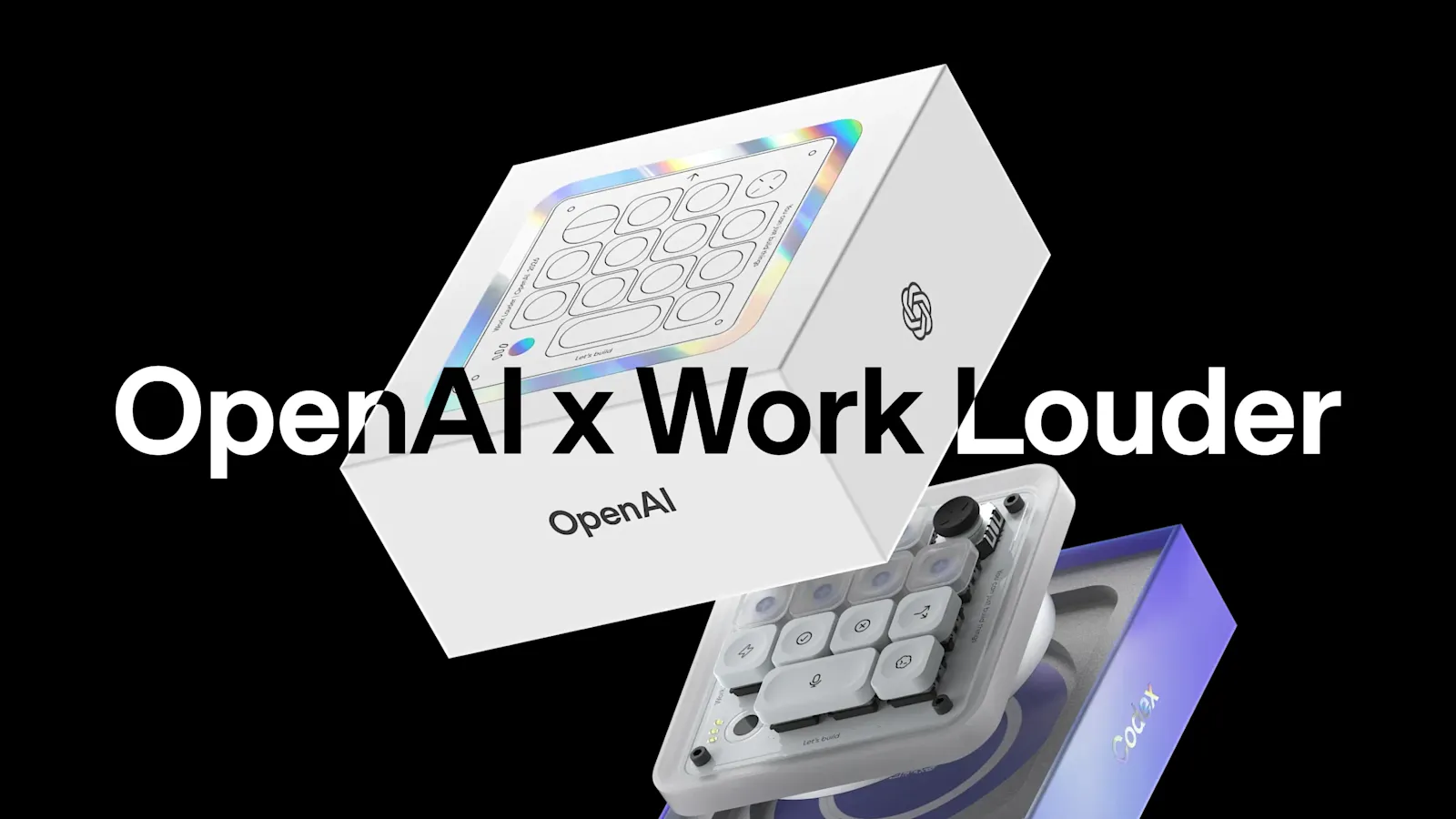
Six Agent Keys can follow active Codex tasks. Their RGB lighting shows whether a task is idle, thinking, complete, waiting for input, or in an error state. Pressing a key switches directly to its assigned task.
Another six keys handle common actions. The default options include approving or declining a request, starting push-to-talk, and sending a message. Builders can remap those keys to actions such as reviewing changes, opening Skills, or creating a pull request.
An analog stick can trigger four more actions or enabled skills. A dial navigates composer controls and can adjust the reasoning level used for a task.
Why it matters
The interesting part is not the mechanical switches. It is the workflow OpenAI chose to make physical.
Codex Micro assumes that a builder may have several tasks moving at once. The main problem becomes tracking which task needs attention, then approving, redirecting, or reviewing it quickly.
That is a different interaction model from typing prompts into one chat. It treats agent work more like a small control room. Status, intervention, and task switching become the central controls.
The six Agent Keys make that shift especially visible. A builder can see that one task has finished while another needs approval without opening each conversation. The device also turns Skills into repeatable controls rather than commands a user must find and launch each time.
Who should care
Codex Micro is most relevant to builders who regularly run several Codex tasks through the desktop app. It may also interest people who reuse the same Skills or approval actions throughout the day.
Someone working in one task at a time has less reason to add a separate control surface. The device addresses coordination overhead, not code quality or model capability.
What this does not prove
BuilderWithin has not tested Codex Micro. There is no evidence yet that its physical controls save enough time to justify the price.
The product is also a limited-run collaboration. One accessory does not establish that dedicated agent hardware will become a broad product category.
What it does provide is a concrete view of the controls OpenAI considers important for agent-heavy work. Those controls center on visibility, approvals, reusable workflows, voice input, and adjustable reasoning.
What builders should do next
Start by checking whether coordination has become a real problem in your own workflow. Count how often you switch between tasks, hunt for one awaiting approval, or repeat the same Skill manually.
If those interruptions are frequent, define a smaller control set before buying more hardware. Pick the task states you need to see and the actions you repeat most. Then make those actions easier to reach through your existing Codex setup.
The useful lesson from Codex Micro is not that every builder needs another keyboard. It is that running more agents only helps when their state and next required action stay easy to understand.
End of article